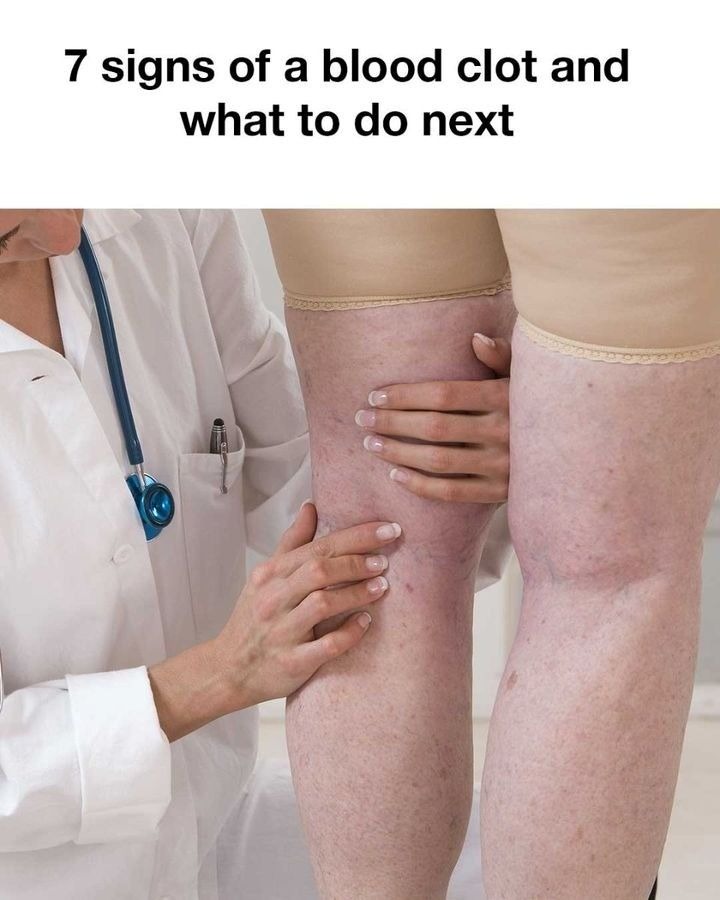
Deep Vein Thrombosis (DVT): A clot in a deep vein—usually the leg or pelvis.
Pulmonary Embolism (PE): A piece of a DVT breaks loose and lodges in the lungs. This is fatal in 25% of cases—often within minutes.
💡 Key insight: Up to 50% of DVT cases show no symptoms—but when signs do appear, they’re rarely subtle. Listen to your body.
⚠️ 7 Critical Warning Signs—Don’t Dismiss These
1. Sudden, One-Sided Swelling
→ Where? Usually the calf, thigh, or entire leg (rarely both legs).
→ Why? A clot blocks venous return, causing fluid to pool.
→ Red flag: Swelling that appears overnight or worsens with standing/walking.
2. Persistent, Deep Pain or Tenderness
→ Feels like? A charley horse that won’t ease—or a “cramp” that lingers for days. Pain often starts in the calf and radiates upward.
→ Clue: Pain intensifies when standing or flexing the foot upward (Homan’s sign—though not always reliable).
3. Skin Discoloration: Red, Blue, or Purple
→ Look for: A patch of skin that’s reddened, bruised, or bluish—especially if it’s warm and tender.
→ Science: Poor oxygen delivery alters skin tone; inflammation raises temperature.
4. Unexplained Warmth
→ Test it: Compare the temperature of both legs. A noticeably warmer area (even without redness) signals inflammation from a clot.
→ Note: Warmth alone is rare—but combined with pain/swelling, it’s highly suggestive.
5. Visible Surface Veins (Distended Superficial Veins)
→ What you’ll see: New, rope-like veins bulging near the skin’s surface—often alongside swelling.
→ Why? Blood reroutes around the clot, overloading smaller veins.
6. Shortness of Breath or Chest Pain (Sign of PE)
→ Emergency signs:
Sudden breathlessness (even at rest)
Sharp chest pain that worsens with deep breaths
Rapid heart rate, lightheadedness, or coughing (sometimes with blood)
→ Act immediately: Call 911. PE can strike without prior leg symptoms.
7. Leg Fatigue or Heaviness
→ Often overlooked: A “weighted” or achy feeling in one leg—like wearing a lead boot.
→ Why it matters: Reduced circulation makes muscles work harder.
🆘 What to Do If You Notice These Signs
Don’t wait. Blood clots escalate quickly.
Call your doctor or go to urgent care/ER immediately. Say: “I’m concerned about a possible blood clot.”
Avoid massaging the area—this can dislodge a clot.
Stay hydrated and elevate the leg only if advised by a professional (improper elevation can worsen some clots).
📌 Diagnostic tools: Doctors may order a D-dimer blood test, ultrasound (for DVT), or CT angiogram (for PE).
🔒 Prevention Is Powerful
