Preparation
Step 1: Preparing and Cooking the Potatoes
Begin by selecting potatoes of uniform quality, preferably starchy varieties such as Russet or Yukon Gold. Carefully peel each potato, removing any blemishes or sprouts that could affect the final flavor. Cut the potatoes into uniform cubes of approximately 3 centimeters to ensure even and efficient cooking.
Place the potato cubes in a large pot with plenty of cold water and add salt generously. The salt will not only season the potatoes from the inside but will also help maintain their structural integrity during cooking. Bring the water to a vigorous boil and maintain the boil for 15-20 minutes, testing periodically with a fork to determine the exact point of tenderness.
Step 2: Making the Perfect Mashed Potatoes
Once the potatoes are completely tender, drain them immediately and allow the excess moisture to evaporate for a few minutes. This step is crucial for achieving the right mashed potato texture. Transfer the hot potatoes to a large bowl and begin the mashing process using a potato masher or large fork.
Gradually add the butter while the potatoes are still hot, allowing it to melt completely and blend evenly. Stir in the finely chopped dill and season generously with salt, black pepper, smoked paprika, and oregano. Mix carefully until you have a smooth, creamy consistency. Taste and adjust the seasoning to your liking. Set the mashed potatoes aside while you prepare the filling.
Step 3: Preparing the Meat Filling
In a large, deep skillet, cook the ground beef over medium-high heat, breaking it up constantly with a wooden spoon to prevent large clumps from forming. Cook until the meat is completely browned and has released its natural juices, which usually takes 5-7 minutes.
Add the finely chopped onion and garlic to the browned meat, reducing the heat to medium. Cook, stirring occasionally, until the onion is translucent and fragrant, about 5 minutes more. This aromatic base, known as sofrito in many culinary traditions, will provide the flavor foundation for the entire filling.
Step 4: Adding Vegetables and Developing Flavors
Add the chopped red bell pepper to the meat and onion mixture, cooking for 3-4 minutes until it begins to soften slightly but retains some texture. Then stir in the diced tomato, cooking for an additional 5 minutes until it softens and releases its juices, creating a moist base for the filling.
Add the tomato paste, mixing it thoroughly with all the other ingredients. Cook for an additional 2-3 minutes, stirring constantly to prevent sticking and to allow the flavors to develop and concentrate. Remove from the heat and add the chopped fresh parsley, gently mixing to preserve its vibrant color and aromatic freshness.
Step 5: Forming the Nests and Preparing for Baking
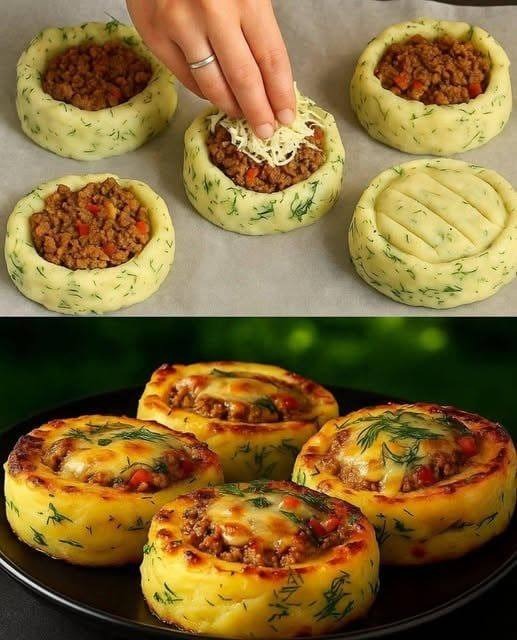
Preheat the oven to 190°C (375°F) and line a baking sheet with parchment paper for easy cleanup. Using a large spoon or ice cream scoop, take generous portions of the mashed potato and place them on the prepared baking sheet, spacing them evenly to allow for expansion during baking.
Using the back of a spoon or slightly damp fingers to prevent sticking, carefully form a central depression in each mound of purée, creating the characteristic nest shape. The walls should be high and thick enough to contain the filling without overflowing during baking.
Step 6: Filling, Topping, and Final Baking
Generously distribute the prepared meat mixture in the center of each nest, filling them completely but not overflowing to avoid spillage. Evenly sprinkle the shredded mozzarella cheese over each filled nest, making sure to cover both the filling and the edges of the mash for even browning.
Bake for 15 minutes, or until the cheese is completely melted, bubbling, and a nice golden brown. For an extra crispy, golden finish, turn on the oven’s broiler for the last 2-3 minutes, watching carefully to avoid burning.
Variations
: Chicken and Spinach Version.
Substitute the ground beef with pre-cooked shredded chicken breast and add sautéed fresh spinach to the filling. This variation offers a milder flavor profile and significantly increases the dish’s vitamin and mineral content, especially iron and folic acid.
Spicy Mediterranean Nests:
Incorporate harissa, hot paprika, or ground dried chilies into the filling to create a fiery version. Add chopped Kalamata olives and crumbled feta cheese to intensify the Mediterranean character and create an interesting salty contrast.
Gourmet Vegetarian Version:
Completely replace the meat with a mix of sautéed assorted mushrooms, diced zucchini, sweetcorn, and chopped toasted walnuts. This variation maintains the substance and satisfaction of the original while providing a completely plant-based option rich in textures and flavors.
Luxury nests with specialty cheeses.
Experiment with combinations of gourmet cheeses such as Gruyère, aged Manchego, or creamy goat cheese blended with traditional mozzarella. These variations significantly elevate the flavor profile and create more sophisticated and complex taste experiences.
Cooking Tips:
The temperature of the potatoes during the mashing process is absolutely critical for achieving the ideal texture. Potatoes that are too cold will absorb the butter unevenly, while those that are too hot can create an undesirable rubbery texture. The sweet spot is when they are hot enough to melt the butter but not so hot as to create excessive steam.
The consistency of the purée should be firm enough to hold the shape of the nests but not so stiff that it’s difficult to mold. If the purée is too runny, add small amounts of potato starch or flour; if it’s too thick, gradually stir in warm milk until you reach the desired consistency.
To prevent the nests from collapsing during baking, ensure that the walls are at least 1.5 centimeters thick and that the base is sturdy enough to support the weight of the filling without sinking.
Serving suggestions:
Serve these nests as a main course accompanied by a fresh cucumber and lemon salad that provides a refreshing contrast to the richness of the dish. The acidity of the salad perfectly balances the intense flavors and helps cleanse the palate between bites.
For special occasions, serve the nests on preheated individual plates, accompanied by seasonal roasted vegetables such as baby carrots, tender zucchini, and cherry tomatoes. This presentation elevates the dining experience to gourmet restaurant levels.
As an option for buffets or casual gatherings, present the nests on a large platter decorated with fresh herbs and accompanied by complementary sauces such as garlic yogurt sauce or mild chimichurri so guests can personalize their tasting experience.
Tips:
Prepare the mashed potatoes and filling separately the day before and store them in airtight containers in the refrigerator. This advance preparation not only saves time on the day of service, but also allows the flavors to develop and concentrate, resulting in a superior final product.
To make shaping the nests easier, lightly dampen your hands or the spoon with cold water. This prevents the purée from sticking and allows you to create more precise and uniform shapes. Keep a bowl of water nearby throughout the shaping process.
For extra crispy nests, lightly brush the edges of the mash with olive oil before baking. This will create a golden, crispy surface that contrasts beautifully with the creamy interior.
For larger events, consider preparing miniature nests using muffin tins. This presentation creates perfect bites for cocktails or elegant appetizers, keeping all the flavors in a manageable portion.
Preparation times
Preparation time: 30 minutes Cooking time: 45 minutes Total time: 1 hour 15 minutes
Nutritional Information
Calories: 320 kcal per nest Protein: 22 grams Sodium: 380 mg Carbohydrates: 28 grams Fat: 14 grams Dietary Fiber: 3 grams Calcium: 180 mg
Frequently Asked Questions:
Can I prepare the nests in advance for large events? Absolutely. The nests can be fully prepared to the point of baking and refrigerated for up to 24 hours. Cover the tray with plastic wrap and bake directly from the refrigerator, adding 5-7 minutes to the baking time to compensate for the lower initial temperature.
What specific type of potato produces the best results? Russet potatoes are ideal because of their high starch content, which results in smoother, creamier mashes. Yukon Gold potatoes also work excellently and contribute a slightly butterier flavor. Avoid waxy potatoes like red potatoes, as they tend to create denser, less manageable textures.
Is it possible to freeze the nests for future use? Yes, the nests freeze exceptionally well. Prepare them thoroughly up to the point of baking, freeze them individually on trays for 2 hours, then transfer them to airtight bags. They can be stored for up to 3 months. Bake directly from frozen, adding 10-15 minutes to the cooking time.
How can I make a completely vegetarian version while maintaining the substance? Substitute the meat with a mixture of well-seared assorted mushrooms, cooked lentils, chopped walnuts, and quinoa. This combination provides complete protein, a satisfying texture, and a deep umami flavor that rivals the original meat version.
What other cheeses work well for topping? Besides mozzarella, excellent options include mature cheddar for a more intense flavor, Gruyère for sophistication, goat cheese for tang, or a blend of Parmesan and Pecorino for umami intensity. Each cheese brings unique characteristics to the final result.
Conclusion
Stuffed mashed potato nests transcend the category of a simple home-cooked recipe, becoming a culinary statement that demonstrates how creativity and technique can transform everyday ingredients into extraordinary gastronomic experiences. This dish perfectly encapsulates the essence of modern cuisine: accessible yet impressive, familiar yet innovative, practical yet elegant
