GENTLE REMINDER: I’m a husband learning behind my wife, who lives with stage IV endo and fibro. This is not medical advice but my own research and a wish to understand. Please share your real-life experiences so I can write more accurately for the next woman. Your lived truth matters more than anything. Tell me what I get right or wrong so I can keep learning and spread better awareness. THANK YOU.
I’m writing this from the perspective of a man trying to make other men like me help women like you better. Not by arguing with your body, but by learning how endometriosis can show up in ways that make people doubt you, even when you are living a pattern that is painfully real.
This topic is one of the rarest I’ve ever researched… endo involving the spinal cord.
It’s so rare that I could barely find it, because most of what we know comes from case reports and small medical reviews, not huge studies. But rare does not mean imaginary. It means unfamiliar. And women get punished for what medicine hasn’t memorised yet. Sounds familiar? Anywho, let me explain what Ifound…
The spinal cord is the “main cable” of the nervous system. It carries messages between the brain and body. If something presses on it, irritates it, or causes bleeding around it, the symptoms can look dramatic, frightening, and very “not pelvic.”
So what does “endometriosis on the spinal cord” even mean?
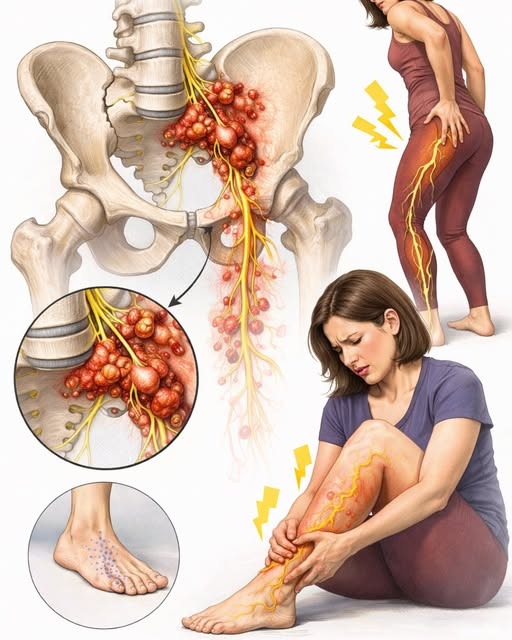
In the very rare cases described, endo tissue is found in or near the spinal canal, sometimes within the spinal cord area itself. This can trigger inflammation, scarring, or even bleeding in a cycle pattern.
And here’s the brutal part! When symptoms involve the spine, legs, or bladder, many women get channelled into the “back problem” world only, or physio, pain meds, “your MRI is fine”, “it’s anxiety”, “it’s your posture”, etc…
Meanwhile the menstrual pattern is sitting there like a flashing sign. When doctors describe these cases, one word comes up again and again: cyclical, meaning, symptoms that flare around a period, sometimes easing after bleeding stops, then returning again the next cycle, not always perfectly timed, but enough to form a pattern.
